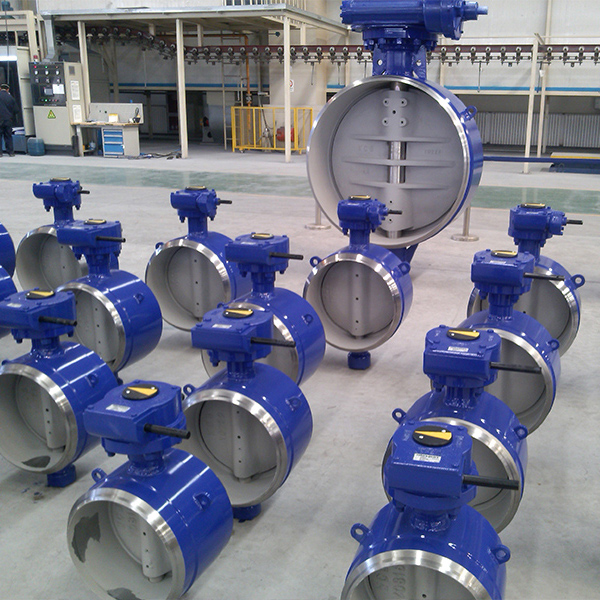
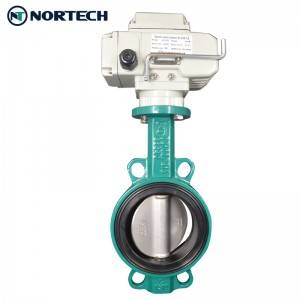
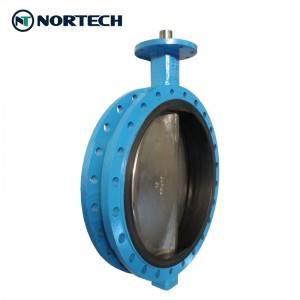
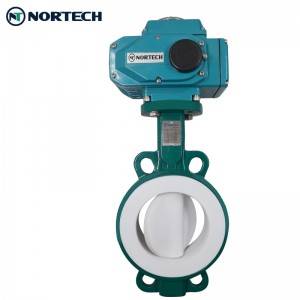
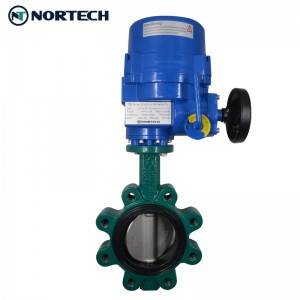
Triple Eccentric Butterfly Valve

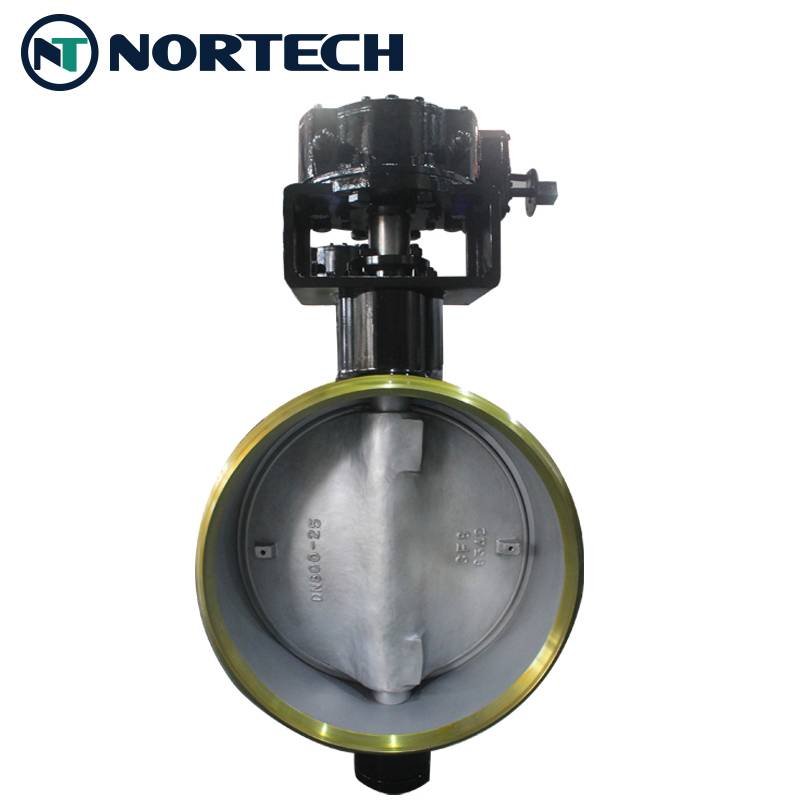
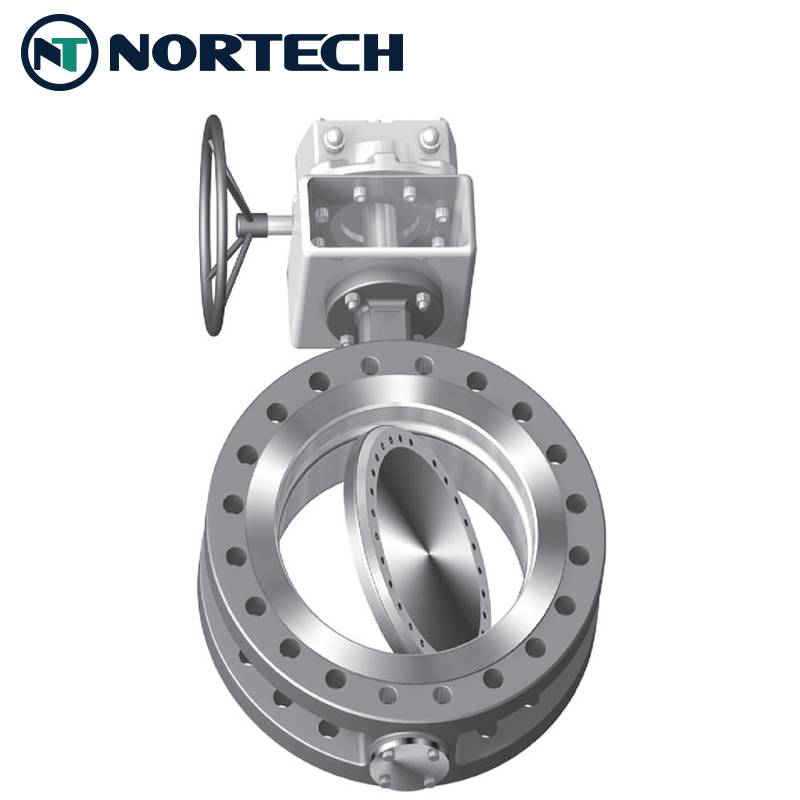
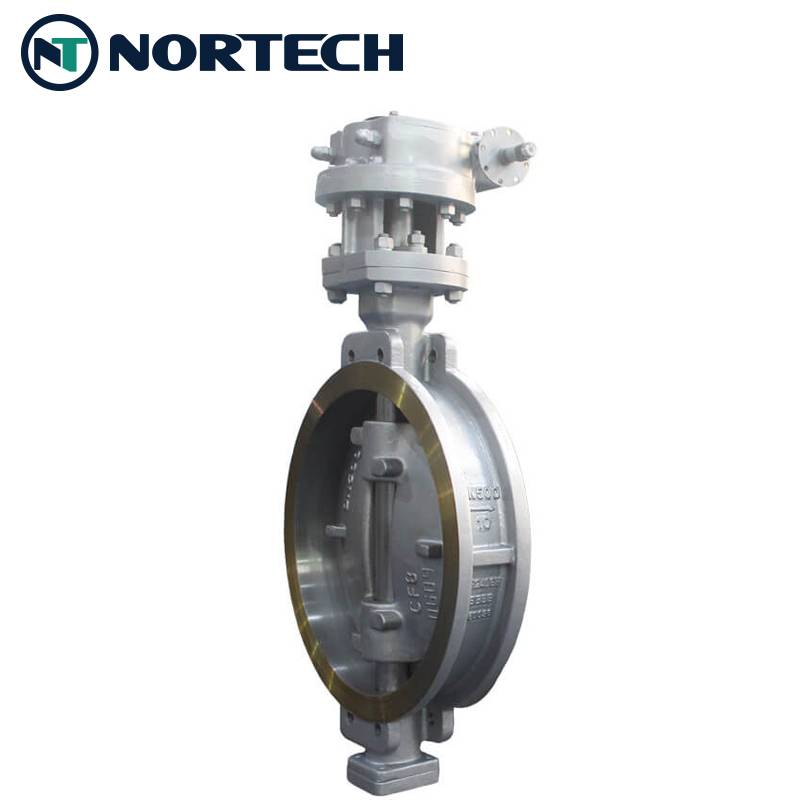
The triple eccentric butterfly valve — also known as a triple offset butterfly valve — is a high-performance butterfly valve engineered for high-pressure, high-temperature, and high-frequency cycling applications. While concentric rubber-lined butterfly valves offer proven reliability and cost-effectiveness for general service, they are not suitable for severe conditions such as elevated temperatures or very high operating frequencies. Conventional hard-seated butterfly valves address some of these limitations, but their sealing performance under demanding conditions has historically been a concern. The triple eccentric butterfly valve was developed specifically to overcome these limitations.
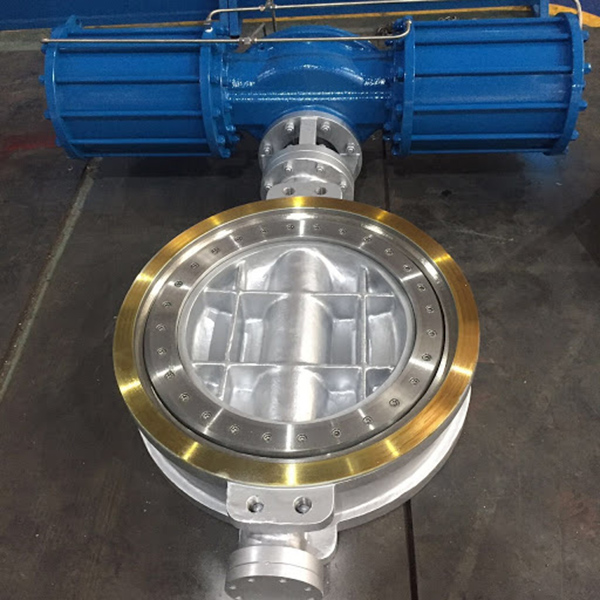
The seat is integral to the valve body, with optimized seating angles and anti-wear coatings suitable for millions of operating cycles. Stainless steel construction provides corrosion resistance, and high-temperature materials are available for demanding thermal environments. Multi-layer soft sealing rings or hard metal sealing rings are fixed to the disc, making the valve significantly more resistant to thermal shock, pressure peaks, and corrosion compared to conventional butterfly valves.
Zero leakage is achieved through a composite stainless steel sealing ring mounted on the disc. The distinctive triple eccentric geometry enables a right-angle rotation with zero friction — eliminating all contact between the seat and sealing ring throughout the 90° stroke. This dramatically reduces operating torque, allowing a smaller and more economical actuator to be specified.
When closing, the transmission mechanism increases torque to provide tight, compensated sealing. This mechanism simultaneously enhances sealing performance and extends the service life of the valve.
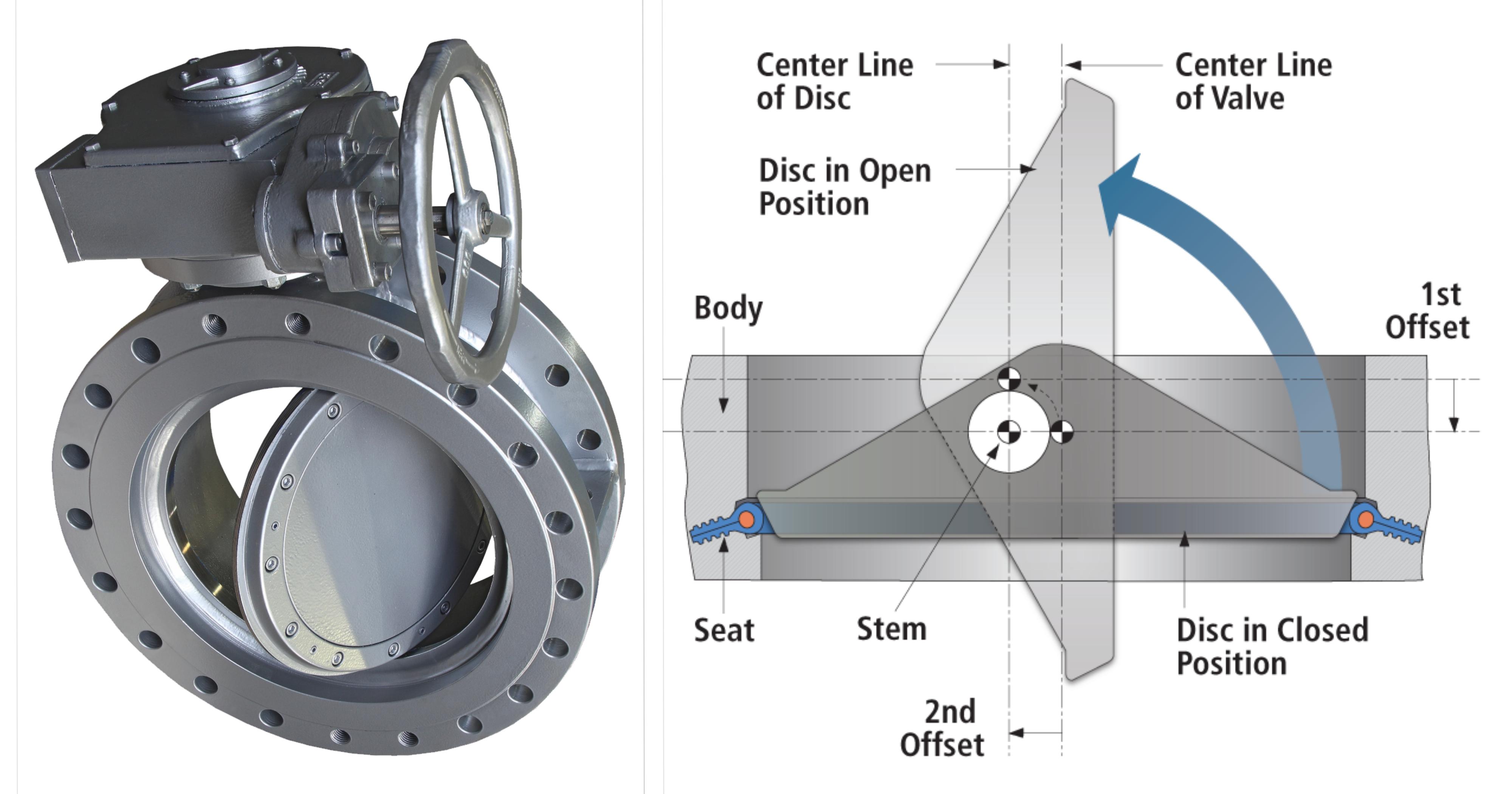
-
1The valve shaft is positioned behind the disc centerline, allowing the sealing ring to fully close against the entire valve seat without interference.
-
2The centerline of the valve shaft is offset from both the pipe centerline and the valve centerline, eliminating interference during opening and closing.
-
3The seat cone axis deviates from the valve shaft centerline, eliminating friction throughout the full stroke and achieving uniform compression sealing around the entire seat circumference.
| Design | API 609 / ASME B16.34 |
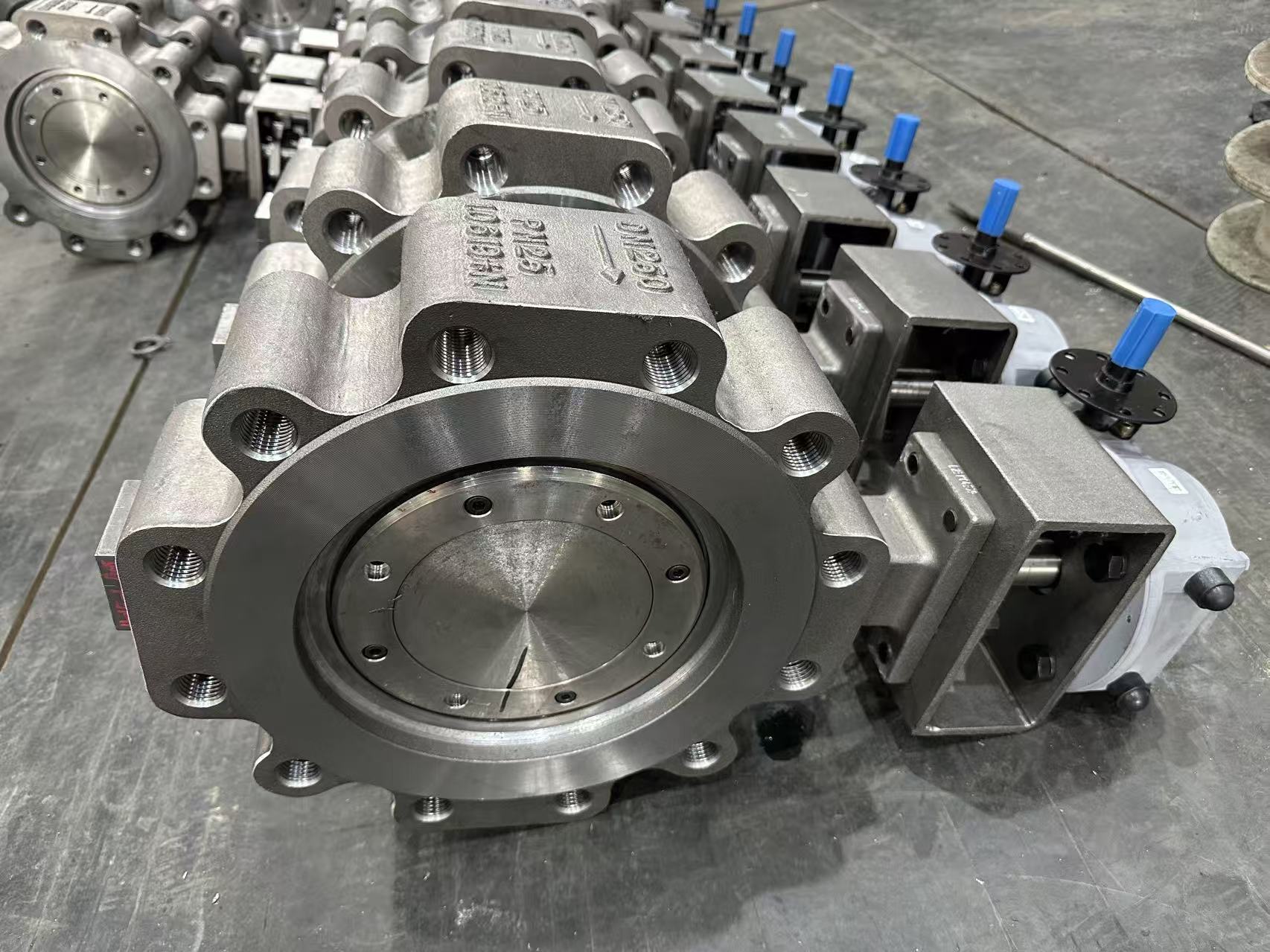
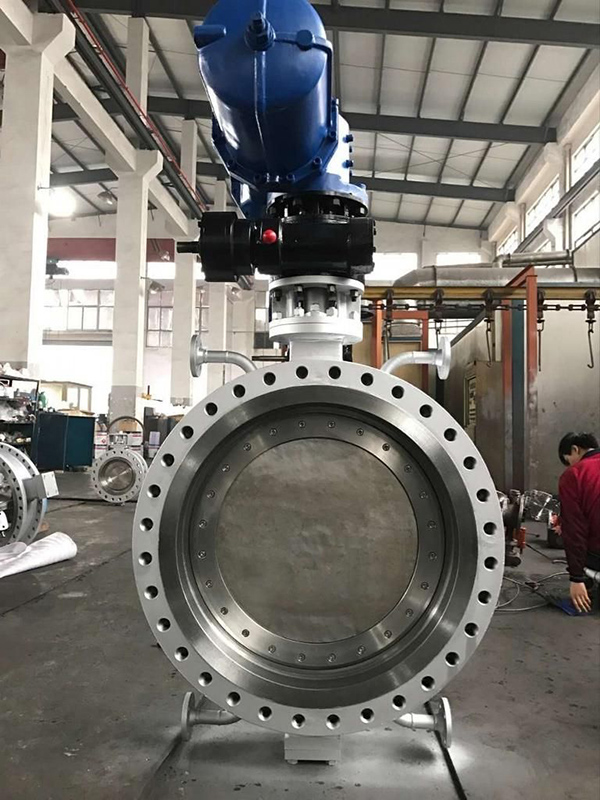
| End connection | Wafer / Lug / Flanged / Buttweld |
| Operation | Manual / Pneumatic / Electric |
| Size range | NPS 2″–60″ (DN50–DN1500) |
| Pressure rating | ASME Class 150 / 300 / 600 / 900 | PN16 / PN25 / PN40 / PN63 / PN100 |
| Flange standard | EN 1092 / ANSI B16.5 / BS 4504 / BS 10 / AS 2129 |
| Face to face | ANSI B16.10 / EN 558-1 |
| Temperature | −29°C to 450°C (depending on materials selected) |
| Body | Carbon steel / Stainless steel / Duplex SS |
| Disc | Carbon steel / Stainless steel / Duplex SS / Alloy steel |
| Stem | 17-4PH / Duplex SS / Alloy steel |
| Body seat | 13Cr / SS304 / SS316 / Stellite hardfaced |
| Seal ring | Multi-layer (SS + Graphite or SS + PTFE) / Metal-to-metal |
| Packing | Flexible graphite |
| NACE MR0175 | To be advised with offer |